Sunggu Hong
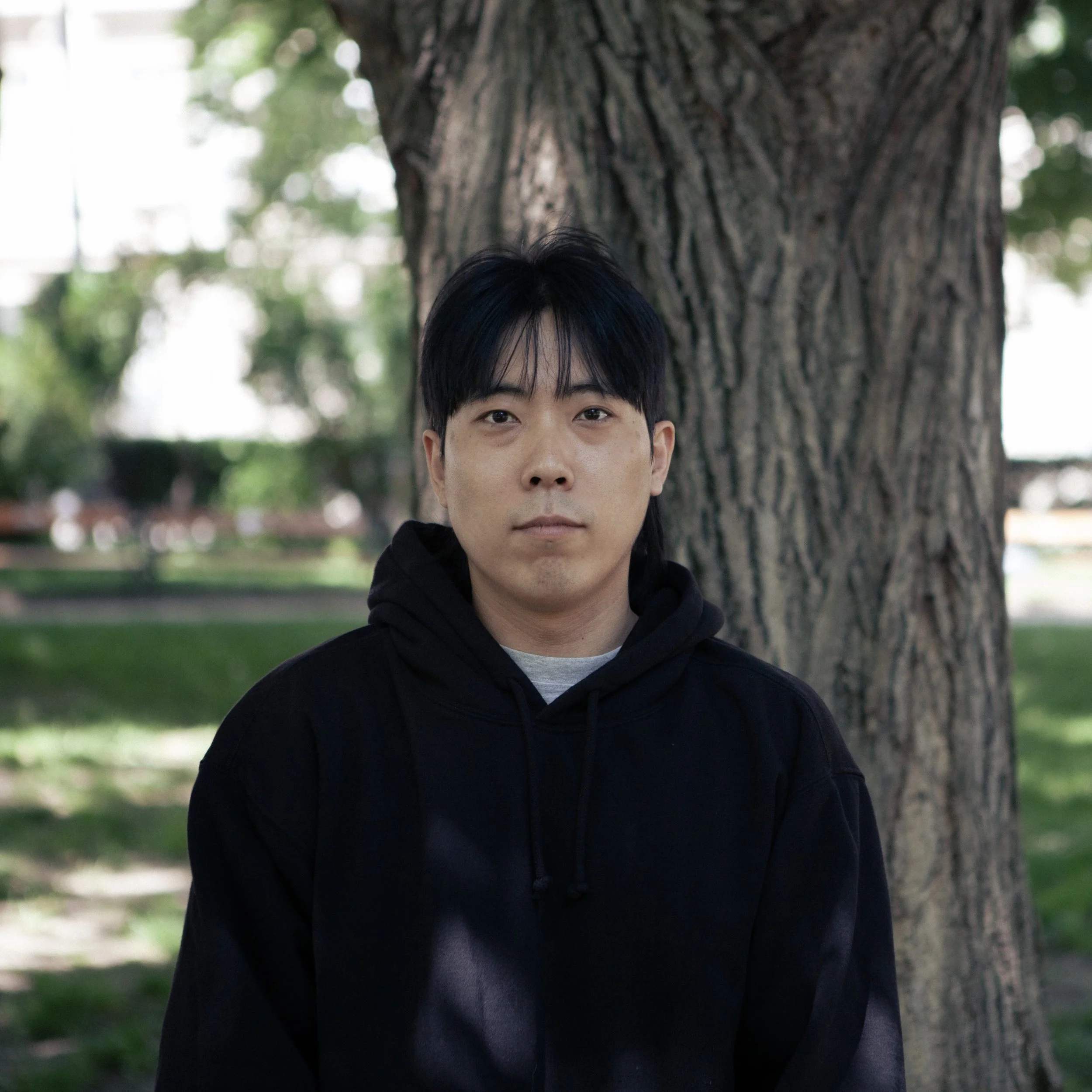
Sunggu Hong is a Vienna-based artist working in visual and performing arts. He studied visual Arts in South Korea and Performative Arts at the Academy of Fine Arts Vienna. With his main concept “Relation/Relatioship”, his work is based on research about alienation and hatred, questioning how we live together. During his studies, he was nominated as shortlist by Ö1 Talentstipendium for Visual arts (2024), received Academy Prize (2025), Cathrin Pichler Prize (2026) and Mentoring Program Art (2026, as Mentee of Elizabeth Ward) by Academy of fine Arts Vienna. He is a part of Huggy Bears Supporting Program 2026, the Residency Im_Flieger 2026 and received TQW Scholarships by Tanzquartier Wien. His works were presented at Kultursommer Wien, Klima Biennale Wien, Index Festival, Eindorf, Das Weisse Haus, Belvedere 21 and Künstlerhaus Wien.
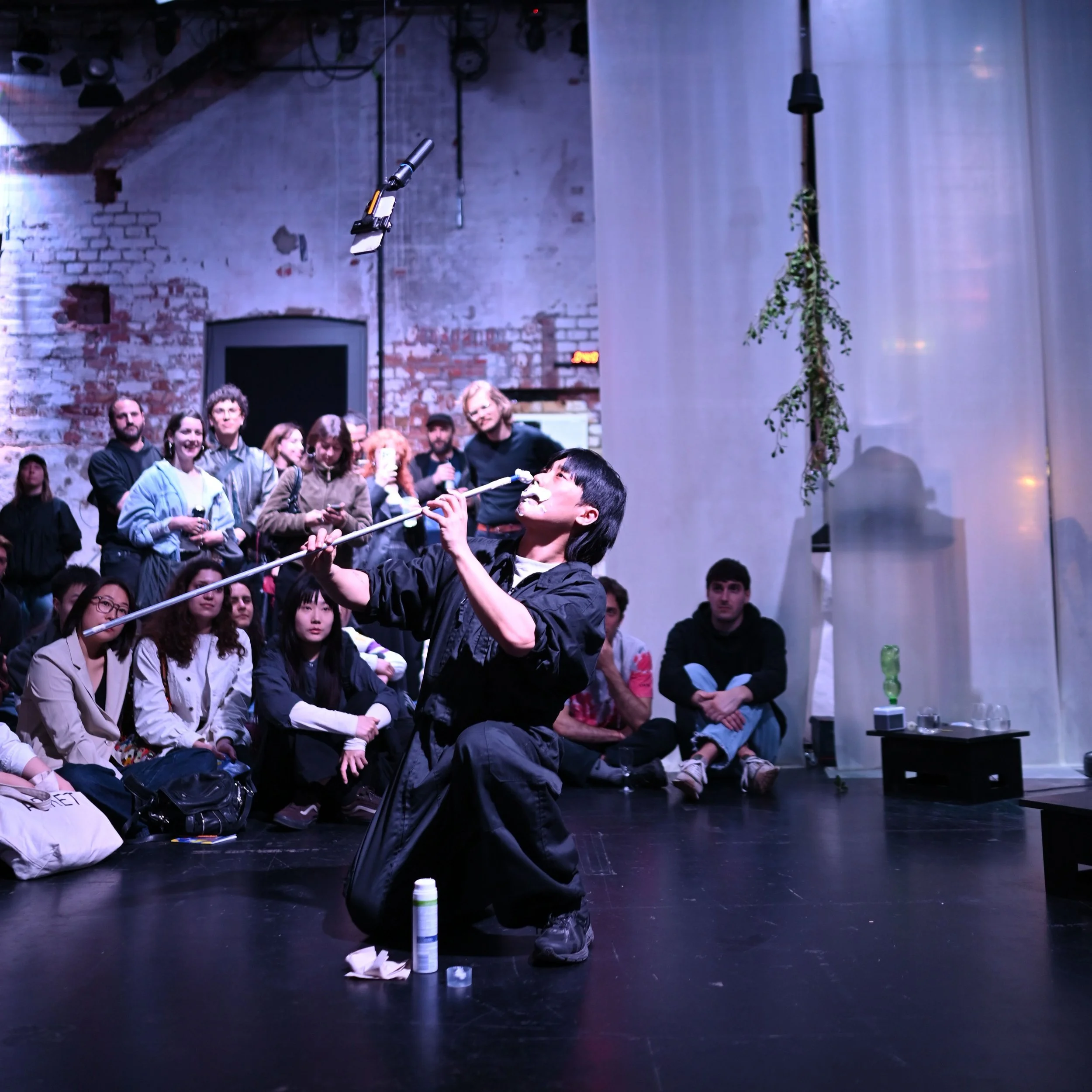
“The breath I exhaled in the theater is inhaled by the performer and penetrates into the performance.”
Artist statement "Relation" 2022.2
When looking at the world with the proposition, “we are all related to each other,” three questions follow. First, “How are we related to one another?” In this question, a physical state of connection does not need to be a necessary precondition. It may be seen like blood that has ‘moved’ through documents or through space and time in a family relation, or like a psychological ‘state of connection’ as in a romantic relationship, perhaps even a logical connection, that is, “‘this’ is related to that ‘subject.’” Beyond that, in a non-logical state, and even beyond it, when the proposition “...relates.” is ‘false,’ the similar yet different proposition “...is not relating.” may also coexist and within relation.
Second, “(Then) when we are related to one another, what kind of influence do we have on each other?” We may say that the influence is ‘minimal,’ or ‘noticeable,’ or ‘positive or negative,’ but prior to such distinctions, it requires an attitude of ‘leaving open’ all possible forms of that ‘kind of influence,’ and of analyzing the process rather than the result. The judgment of that influence is never fixed and is indeterminable. Then, does that ‘kind of influence’ itself also possess an indeterminable character?
The statement, “The sun beyond that universe relates to me,” makes me excited. A shadow is formed in front of me. This shadow is not made by the sun alone. Yet it is also insufficient to say that it is made together with ‘my body.’ For this shadow to be formed, it is also because the moon is on the opposite side, because my body is attached to the ground, because of the posture of my body that allows the shadow to enter my field of vision, and even the ‘absence of the shadow,’ where the shadow does not exist, makes the ‘presence of the shadow’ possible. And what must not be forgotten is that this shadow responds to the movement of any one of these and changes its form.
Lastly, the question, “What kind of relationship do we have with one another?” contains within it the question from the second point, with ‘how’ added to ‘what kind of influence’: that is, “When we are related to one another, how, and what kind of influence, do we give to each other?” This question (if that is so) results in our individual attitudes or sense of responsibility, or in the ‘awareness’ of all these words; yet this result connects again with the starting point and does not become fixed. That is, these three questions and the proposition “We are all related to each other” are intertwined without order, and in the very form of being entangled, attempt to move away from universality.
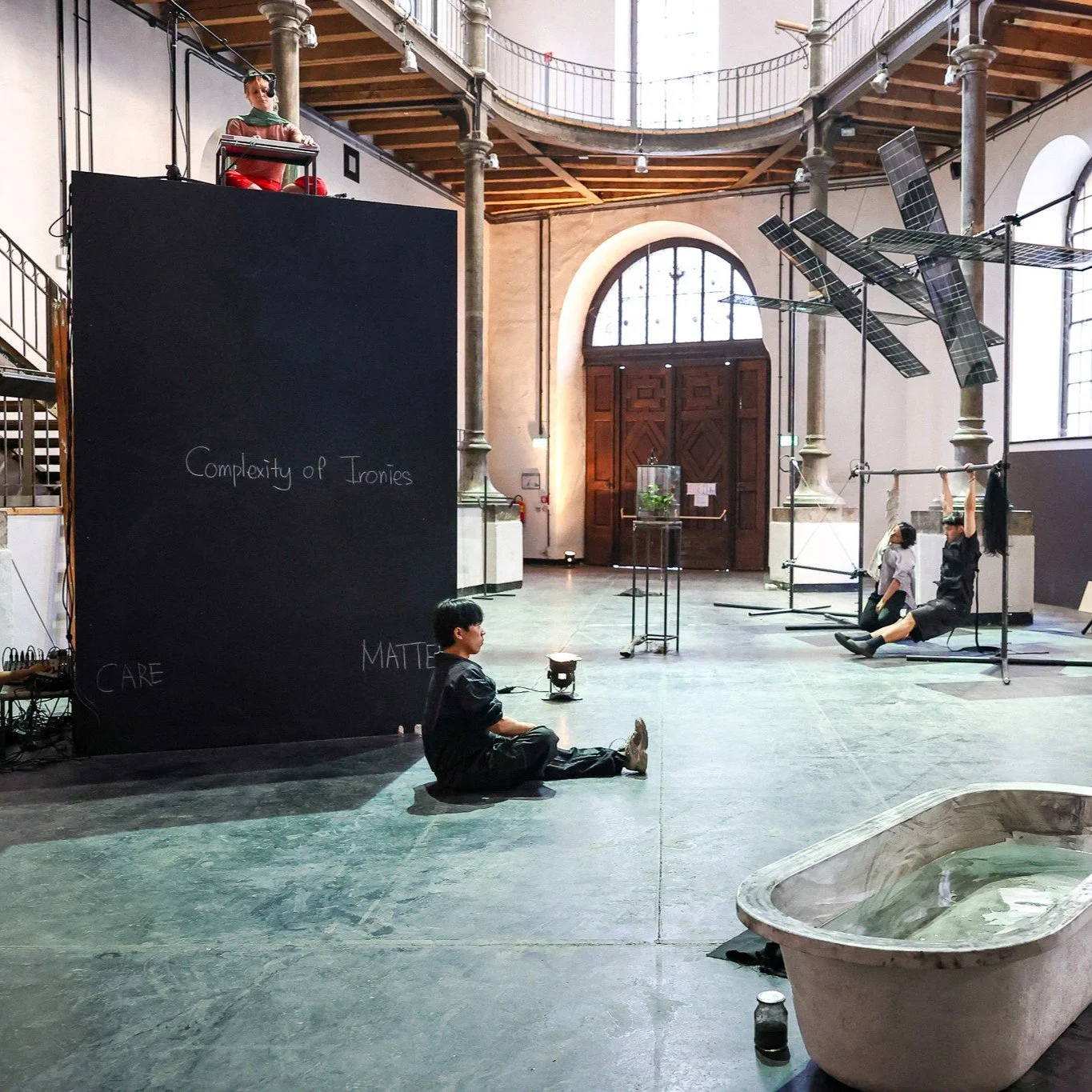
The breath I exhaled in the theater is inhaled by the performer and penetrates into the performance. And the boundary of that ‘performance’ collapses. Yet people do not easily notice that ‘the boundary has collapsed.’ That is, they do not feel that they themselves have ‘become performers.’
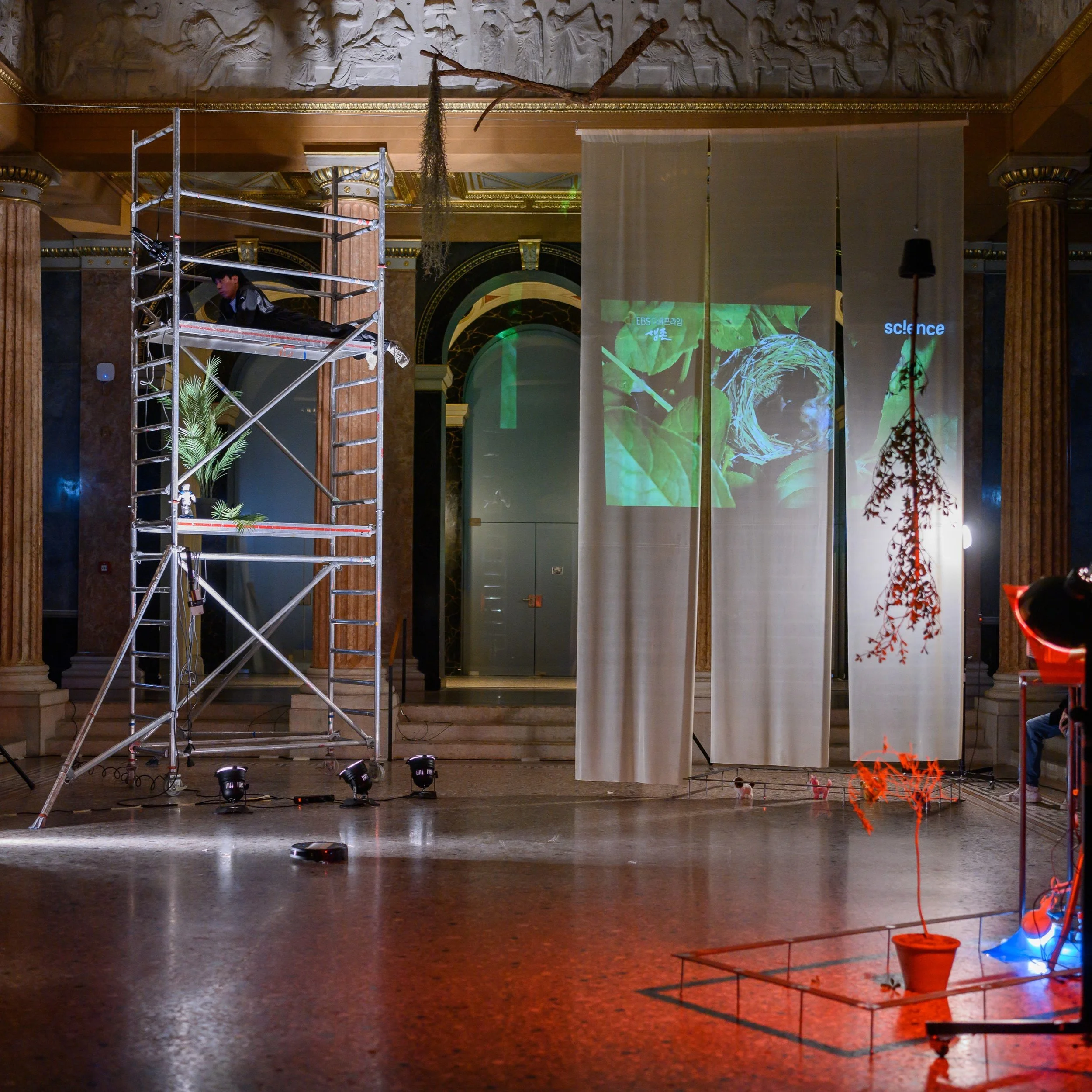
Once, while leaving my house and walking, I had a ‘strange feeling’ that the grass and trees in front of me were ‘related to me.’ And in that moment, the feeling of loneliness I had disappeared, and at the same time I thought, ‘we are together.’ So, I asked, “Then how should we move?” The feeling of ‘being together’ with the grass and trees I met that day both exists and does not exist until now. That is, neither ‘I’ nor the grass and trees make an effort to confirm the presence or absence of that feeling.