Francisco Valença Vaz
Valença Vaz's work focuses on the intersections between the human body and its dematerialization. Through an interdisciplinary methodology that explores narrative structures, the work investigates posthuman conditions within the realm of commercial aesthetics and migratory objects. In contrast to the banality of everyday life, these objects become relics that demand belief and hope. Within this landscape of desperation, the work asks what longings of modernity remain in a world that smells only of gasoline and freshly unboxed iPhones.
“Pathologically to my work, a shining persuasive surface is inviting attraction before pretentiously interrupting it.”
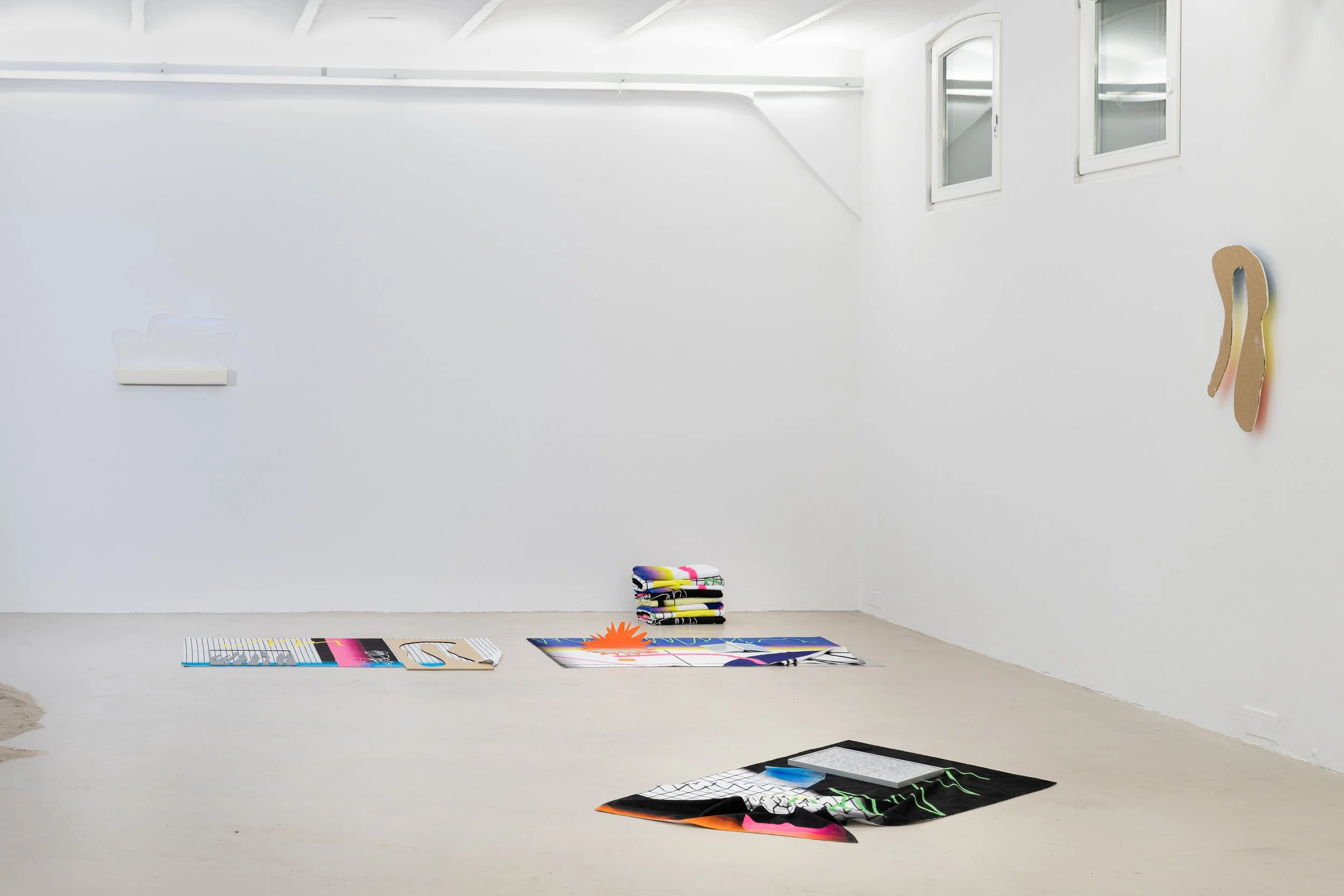
My artistic practice investigates how everyday objects shape power relationships, through affective forces that materials can perform. Mostly focusing into consume products, objects connected to transition. In with persuasive trace resting heavy behind your shoulders, I reproduced handles from Vienna’s underground trains, offering accessibility, but also regulating it ́s relation to the passenger’s body within a public space. This is related to my experience of migration which influences my interest for movement and constructed landscapes, for artificial materials as Styrofoam or cardboard, made to transport things of value.
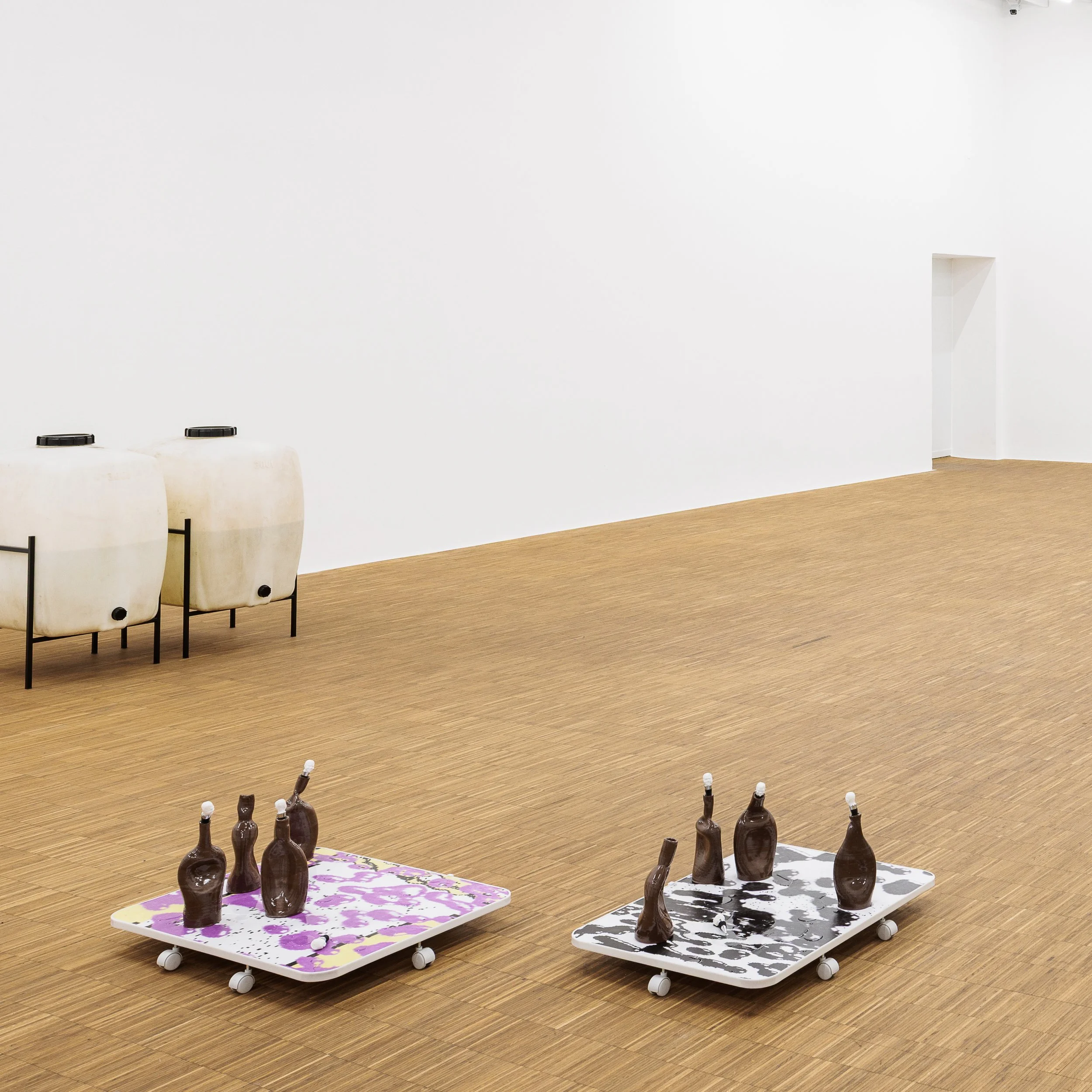
My current research extends into Austrian wine culture, where I investigate how national identity is encoded through narratives of terroir and landscape. Claims of purity overlap the hybridity of vines themselves, becoming a material archive performing territory. When this claim is positioned against the modernity, wineries romanticize their landscapes as timeless, emphasizing prehistoric influences. This fixation on geological conditions can invite a political mythmaking, allowing motifs of “blood and soil” to reappear. This research focus on the aroma of the Austrian political right, not only in a glass, but spreading like a fine dust across its entire being, all of which continually present themselves as self-evident. Here it remains invisible as it does not present itself as an explicitly articulated ideology, but as taste.
Each work demands its own form, becoming an image and a critique of the image. Pathologically to my work, a shining persuasive surface is inviting attraction before pretentiously interrupting it.